

This summer, AHA’s inaugural If Not Now fellowship brought college students from nine colleges and universities across the U.S. to New York City for an intensive week of learning, simulations, and expert briefings. We sat down with Morgan Miller, Program Director, to hear how the fellows were trained and empowered to push back against antisemitism.
What did you feel when you first walked into the room for AHA’s inaugural If Not Now fellowship?
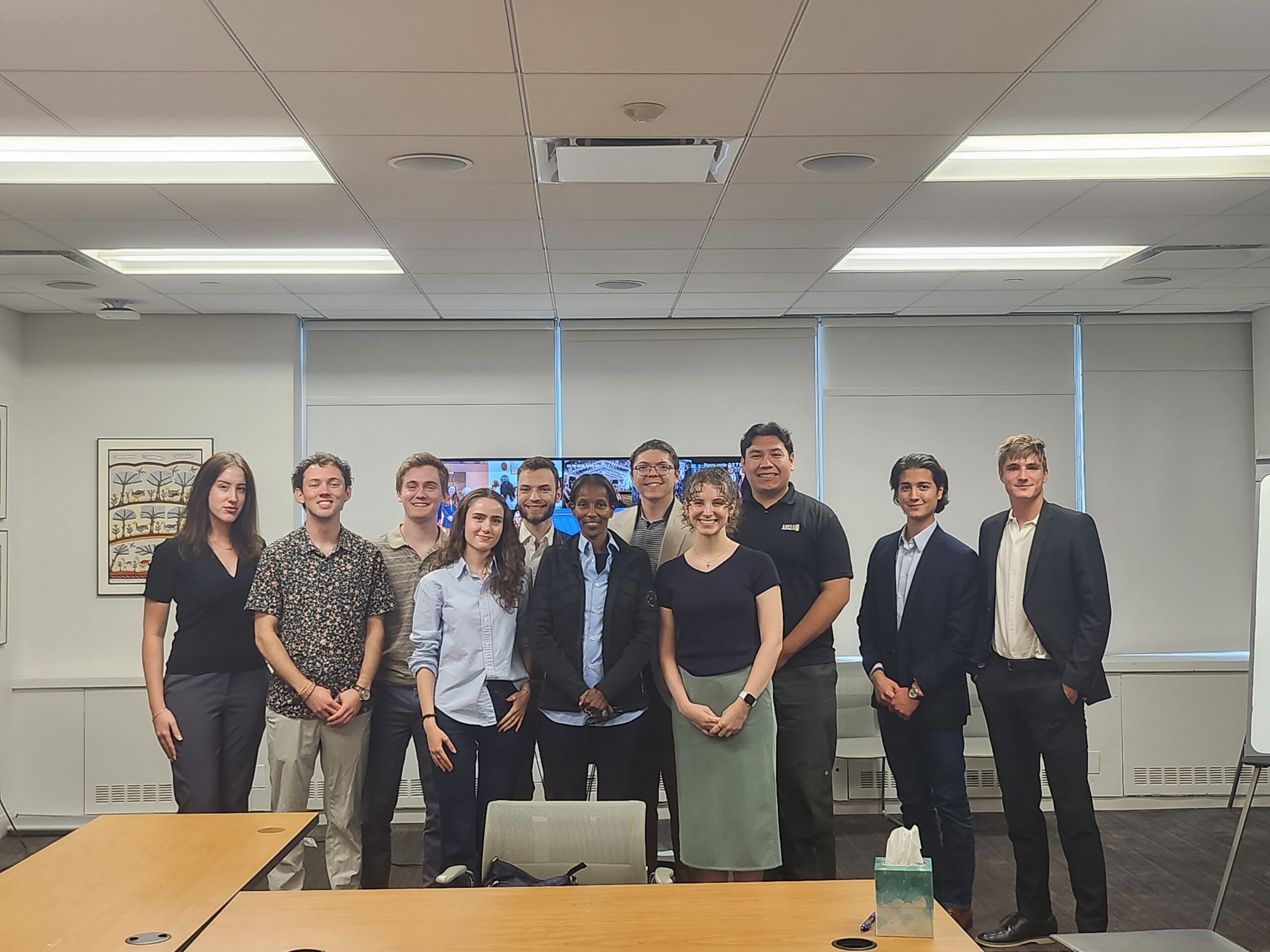
Our first cohort of fellows with AHA Foundation Founder Ayaan Hirsi Ali
Morgan Miller: It felt somewhat surreal. Nearly a year after being tasked with creating a program for college students focused on combating antisemitism, I found myself standing before ten bright-eyed fellows, seeing that idea come to life.
The yearlong journey from a concept to a fully fledged program led to more partnerships and collaboration on antisemitism than I could have ever imagined. In many ways, the fellowship marked the beginning of AHA’s four-year initiative, Courage to Confront.
Who were the fellows and what motivated them to join?
Dr. Aaron Pomerantz, Assistant Director of Research and Evaluation at Rice University’s Doerr Institute for New Leaders, leading a session on “Honor and Grievance: The Cultural Dynamics of Antisemitism”
Morgan Miller: The ten college students in the room represented institutions from across the United States—from California Lutheran University to UATX, the University of Dallas, and Regent University.
Despite differences in religious conviction, background, institution, and geographic location, they shared a common interest in understanding the historical roots and contemporary manifestations of antisemitism and a commitment to combating its rise on their college campuses.
Equipped with the knowledge and skills they gained through the fellowship, and drawing on their leadership roles on campus and in their communities, I have no doubt that these students will go on to launch meaningful initiatives and make a lasting impact.
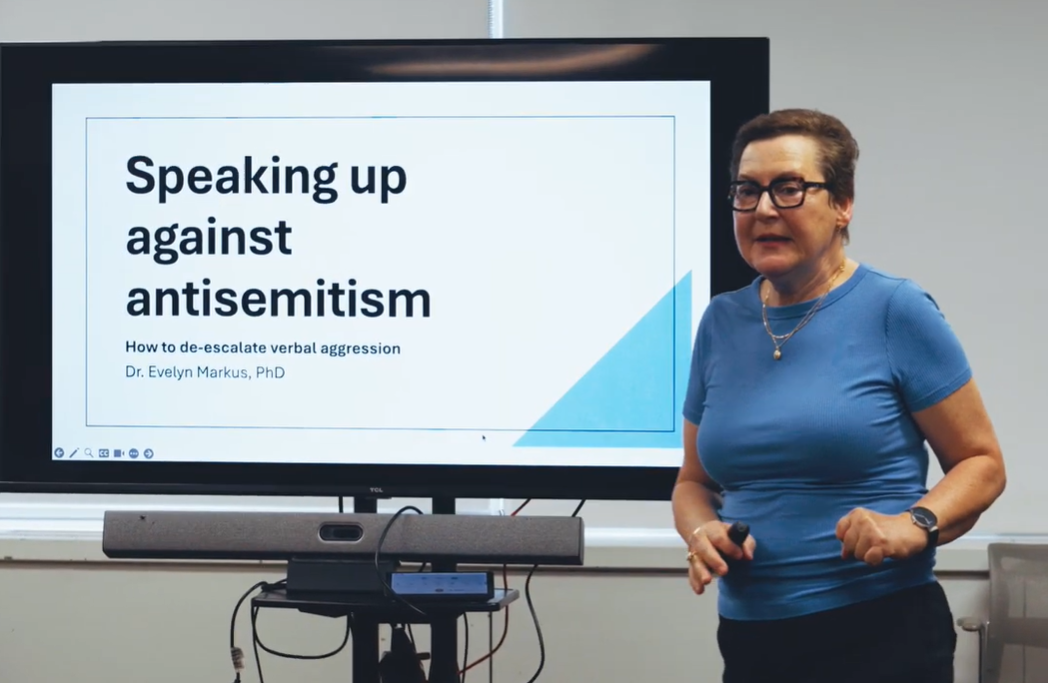
Evelyn Markus lectures on why speaking out against antisemitism matters
We had some incredible speakers at the event, can you tell us about them and what they shared?
Morgan Miller: Our speakers were experts from around the world who addressed different aspects of antisemitism. The first part of the program focused on the history of antisemitism and its manifestations on both the political Left and Right.
The second part of the program focused on equipping students with the knowledge and skills needed to combat antisemitism on their campuses. Throughout the week, fellows also participated in excursions led by highly specialized professionals at the Metropolitan Museum of Art, Shearith Israel Synagogue, and the Jewish Museum.
Meet the Speakers
History of Antisemitism and Its Manifestations on the Left and Right:
- Dr. Aaron Pomerantz—Assistant Director of Research and Evaluation, Doerr Institute of New Leaders, Rice University
- Dalia Ziada—Author; Executive Director, Center for Middle East and Eastern Mediterranean Studies, ISGAP
- David Bernstein—Author; Founder & CEO, NAVI
- Dr. Samuel Goldman—Professor, University of Florida
Skills & Practice to Combat Antisemitism:
- Dr. Adam MacLeod—Professor of Law, The Catholic University of America
- Dr. Evelyn Markus—Co-host, Never Again Is Now podcast
- Dr. Matthias Becker—Research Scholar, NYU Center for the Study of Antisemitism
- Michele Hanash—Director, Policy and Women’s Programs, AHA Foundation
What concrete skills and support did fellows leave with? Can you give one example?

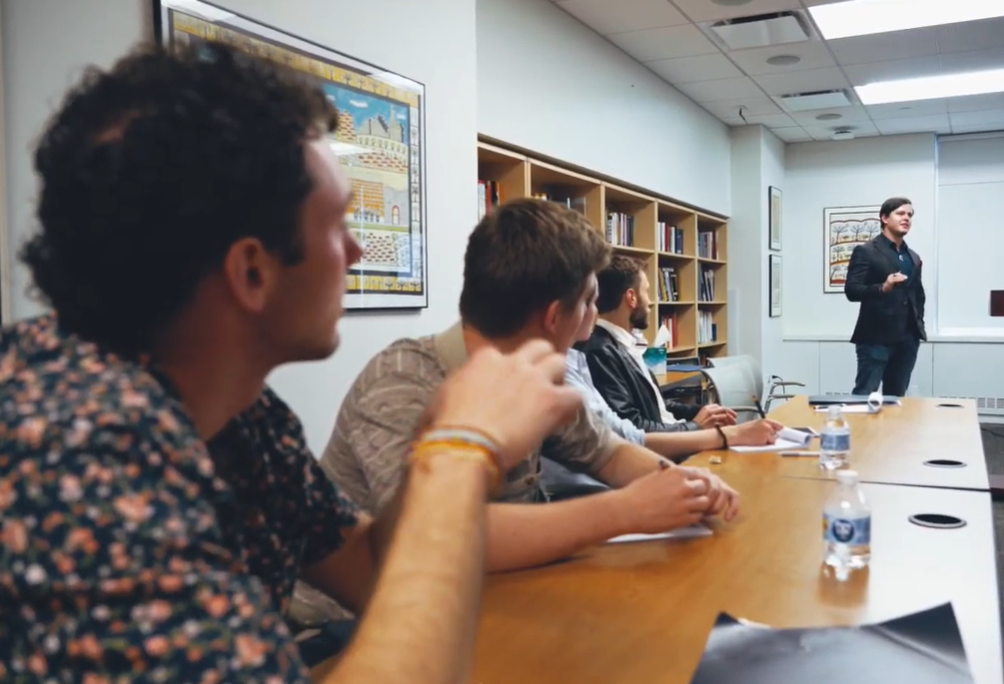
Fellows take notes during a session at the fellowship training
Morgan Miller: In our early discussions about what we hoped the fellowship would look like, we identified three things we believed students needed to effectively combat antisemitism on their campuses: the intellectual skills to recognize when rhetoric is rooted in antisemitism; the practical skills to de-escalate conversations with people who may intend harm toward their Jewish peers; and a strong support system that would give students confidence that they were protected and equipped to navigate conflict when it arose.
The fellows participated in simulations with actors portraying various forms of antisemitic rhetoric, giving them the opportunity to practice de-escalating heated conversations in a controlled environment. I was particularly impressed by how the students responded under pressure and by their willingness to be vulnerable with one another throughout the exercises. For many of the students, this was a highlight of the program.
Throughout the fellowship, students also met with representatives from organizations engaged in the fight against antisemitism, including Tikvah, Passages, and StandWithUs.
Our goal was to provide students with opportunities to continue exploring the material covered during the program while also helping them build relationships with organizations that offer legal, educational, and practical support to students confronting antisemitic bias on college campuses.
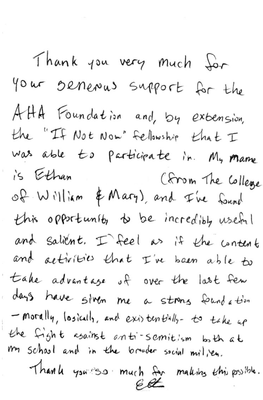
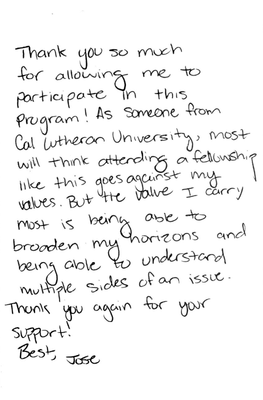
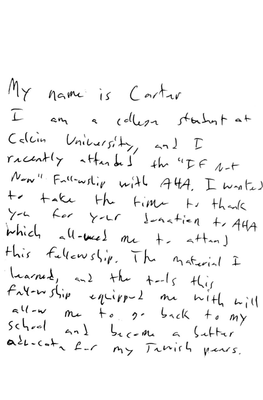
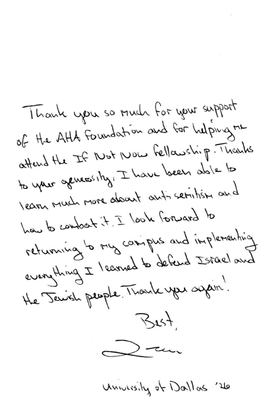
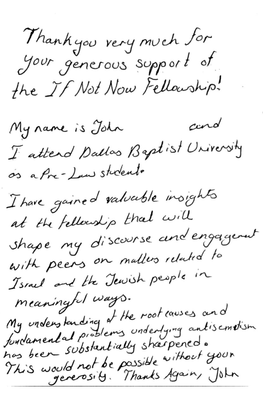
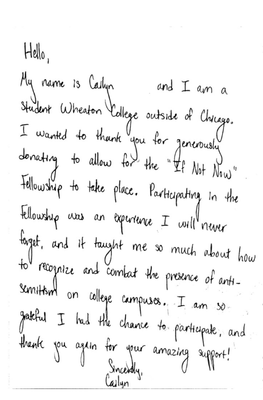
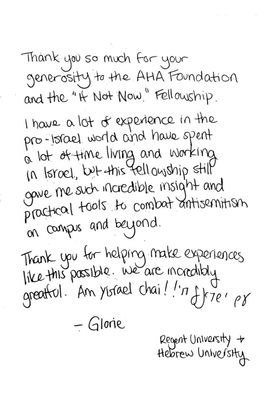
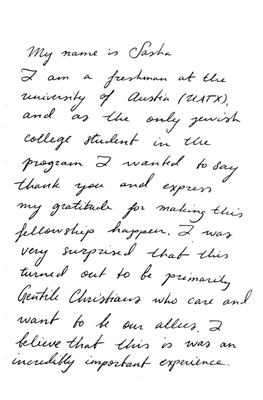
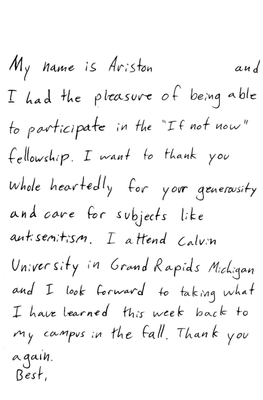
In Their Own Words: Thank You Notes from Our Fellows
Our first cohort of fellows wanted to share their gratitude directly with the donors who made this training possible.
Get Involved
Applications to our next fellowship cohort will be open soon.
Donate to support the next cohort: Give now