

Pulling Back the Curtain: What We Discovered in America’s K-12 Classrooms
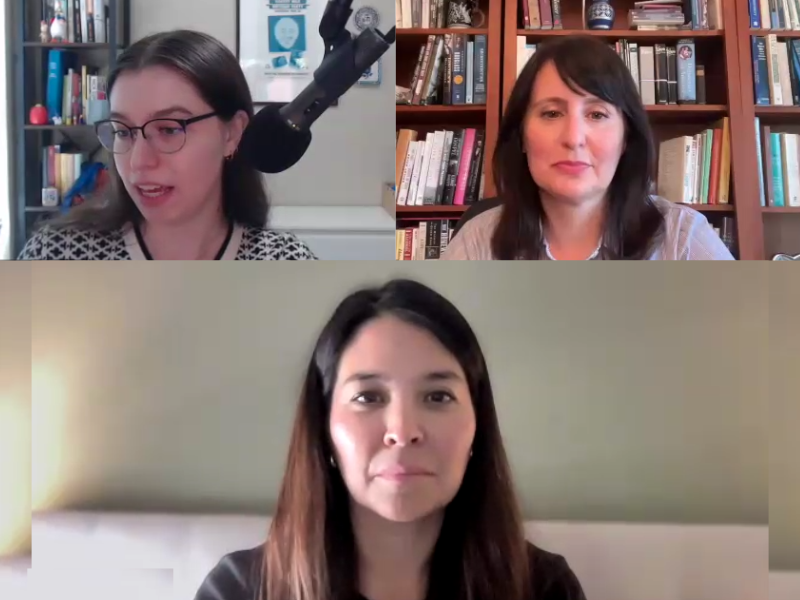
Susanna McIntyre(left, top) leads one of the webinars in AHA’s Recapturing Liberalism in Education webinar series.
November 19, 2025
AHA Foundation recently completed its six‑part Recapturing Liberalism in Education webinar series. Conceived in the aftermath of the October 7 attack in Israel, as pro-Hamas protests erupted across U.S. campuses, and guided by our founder Ayaan Hirsi Ali’s article We Have Been Subverted, the series set out to examine how illiberal ideologies are taking root in our K-12 schools, and what the erosion of liberal values means for the future of education.
We launched this series determined to bring our supporters and the concerned public into direct conversation with leading education experts and researchers sounding the alarm from K‑12 classrooms. Along the way, we uncovered realities that were both eye‑opening and urgent.
To highlight the most important lessons, we sat down with AHA’s Development Associate, Susanna McIntyre, who guided the series. In this conversation, she reflects on the key takeaways, the moments that challenged her thinking, and why the fight for liberal education is more critical than ever.
Susanna, take us back to the beginning: what sparked this series, and why now?
Susanna: When we at the AHA Foundation set out to create this webinar series, I knew something was broken in American K–12 education, but I didn’t realize how deep the problem went.
At AHA Foundation, we’ve spent years tracking ideological capture in higher education, launching programs like our Critical Thinking Fellowship to expose students to the liberal principles their universities often ignore. But what we began to notice, through research, conversations, and growing feedback from our supporters, was that this ideological rot had spread beyond the university and into our public schools.
We launched Recapturing Liberalism in Education to pull back the curtain.
How did you bring this vision to life, and what impact do you think it had?
Susanna: Over six webinars, we brought together teachers, policy experts, parents, and grassroots organizers to explore what’s happening in the classroom and how to fight back. Topics ranged from curriculum politicization and declining academic rigor to the role of teachers’ unions and antisemitism in K–12. Our goal was to equip the people on the front lines with knowledge, tools, and a sense that they aren’t alone.
What revelation hit you hardest as the series unfolded?
Susanna: I was prepared for controversy, but I wasn’t prepared for how normalized some of the indoctrination has become. There’s a growing assumption, among administrators, consultants, and even some teachers, that politicized content belongs in the classroom. It’s not just creeping in, it’s being institutionalized. And families often don’t realize it until it’s already taken root. That realization deepened the sense of urgency behind this work.
Could you share some examples?
Susanna: One of the most striking sessions was with Dr. Mika Hackner. She showed real assignments from public school curricula—students asked to map their “privilege,” write letters to convicted criminals, or view Israel through the lens of apartheid. A 145-slide “Black Studies” unit didn’t include Martin Luther King Jr., Frederick Douglass, or Rosa Parks at all. It reminded me of a comment I heard at the Empowered Ed 2024 Leadership Summit, where a parent said, “How dare you teach my child learned helplessness?” This parent was referring to the way some new curricula teach young students to see themselves solely as victims of systemic oppression, stripping away any sense of initiative or possibility. That line has stayed with me; it captures exactly what’s at stake.
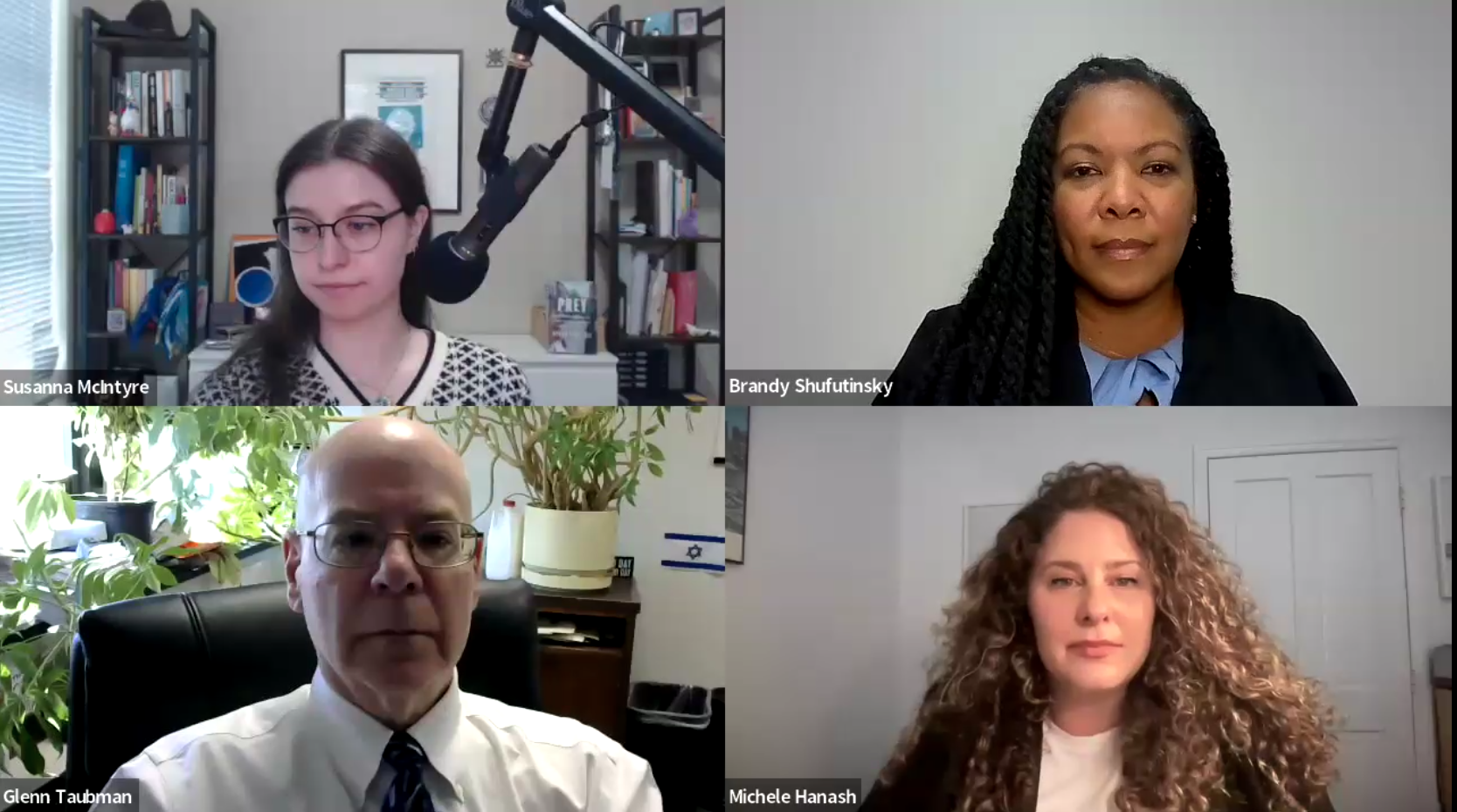
Speakers at the “Antisemitism in Education: How Teachers’ Unions & Colleges of Education Undermine Academic Neutrality” webinar
You hosted all the webinars in the series except the fourth, Antisemitism in Education: How Teachers’ Unions & Colleges of Education Undermine Academic Neutrality, which was developed and moderated by our Director of Policy, Michele Hanash. What struck you about the timing of that session?
Susanna: What really struck me was how perfect the timing was: the webinar occurred on the same day the Nation’s Report Card was released and just before the panelists both testified before Congress, underscoring the urgency of what we were discussing.
The Nation’s Report Card showed that students are graduating from high school without basic reading comprehension, a damning reflection of the failures we discussed. And then, within a day of our session, both Glenn and Brandy, the webinar panelists, were testifying before Congress on these same issues. It felt like our conversation wasn’t just theoretical; it was part of a national reckoning happening in real time. That alignment made clear that the problems we’re exposing in education aren’t abstract; they’re immediate, and they demand action.
What do you think Glenn Taubman’s and Dr. Brandy Shufutinsky’s insights reveal about the bigger challenges facing K‑12 education today?
Susanna: Glenn emphasized how major teachers’ unions, like the NEA and AFT, have veered far from their core responsibilities by adopting official stances on foreign policy issues like the Israeli-Palestinian conflict, topics that have no connection to labor or education. Most importantly, both speakers made it clear that even though discrimination based on religion or ethnicity is illegal, these protections often fail in practice when the discrimination is ideological and framed in progressive language.
The deeper problem, as Glenn explained, is that unions routinely claim that virtually all of their actions, including distributing biased materials or creating hostile environments for Jewish teachers, are shielded under “protected concerted activity” in labor law. That legal loophole allows unions to justify conduct that would otherwise be recognized as discriminatory, leaving teachers with almost no practical recourse.
What stories from parents or teachers stayed with you?
Susanna: I was struck by the courage of families and educators who are quietly fighting back. Nicole Neily and Rebecca Schgallis shared how parents are using public records requests and legal action to push for transparency. Brandy Shufutinsky and Elina Kaplan spoke about the emotional toll on families trying to protect their kids while navigating hostile school bureaucracies. These are people who refuse to give up, even at great personal cost.
Where do you see the most significant gaps still remaining?
Susanna: There’s almost no accountability in how curricula are developed or implemented, especially considering that curriculum is developed and approved differently in every state. Policy changes are slow, and enforcement is even slower. Parents technically have rights, but often no clear path to exercise them. Meanwhile, activist educators are capturing school boards, teacher training programs, and even state departments of education. The gaps are systemic, and they leave families feeling powerless.
Amid all the challenges, did anything give you hope moving forward?
Susanna: In our final session, we shifted from diagnosis to strategy. Panelists like David Bernstein, Jennifer Richmond, and Asra Nomani showed how they’ve built cross‑ideological coalitions grounded in liberal principles like free inquiry and individual dignity. Their message was clear: it’s not enough to oppose the bad; we have to build the good together. That gives me hope. And I’m deeply grateful to every panelist, attendee, and donor who made this series possible. This was just the start. At AHA, we’ll keep supporting those who refuse to give up on their public schools.
Looking back, which episodes stand out as “must‑watch” for anyone who wants to understand the challenges and solutions we explored?
Susanna: My personal favorite was the third installment of our series, Antisemitism in K-12 Education – A Warning Sign for Society, with David Bernstein and Dr. Naya Lekht. It unpacked the deeper ideological drivers of antisemitic narratives in schools and made a compelling case that what begins as bias against Jews often signals a broader collapse of academic integrity. Bernstein’s warning about moral inversion and Lekht’s powerful examples from her curriculum work brought clarity to a problem too few are willing to name. It set the tone for the rest of the series.
Please share with our supporters how we plan to build on this momentum.
Susanna: The Recapturing Liberalism in Education series pulled back the curtain on what’s happening in K–12 classrooms and revealed the courage of those fighting for change. We are in the midst of preparing to launch new initiatives and expand our work in combating antisemitism on college campuses, with teacher education, and correcting media bias when reporting on Islamism.
With your support, AHA Foundation will continue equipping parents, teachers, and communities with the knowledge and tools they need to protect students and restore education grounded in dignity, inquiry, and truth.