

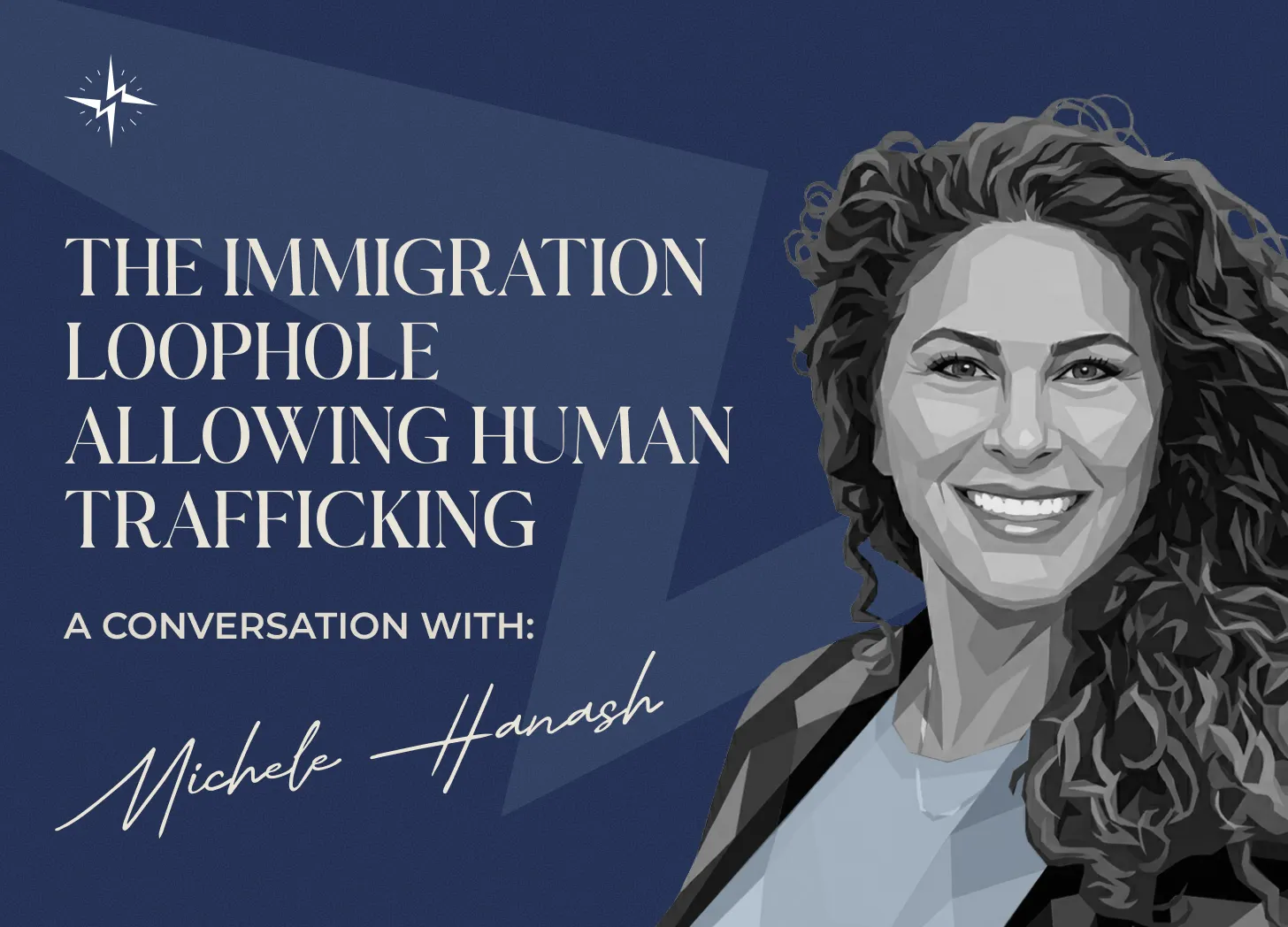
Michele Hanash is a U.S.-based lawyer on the frontlines of the battle against child marriage as the Director of Policy and Women’s Programs at the AHA Foundation, founded by Ayaan Hirsi Ali in 2007.
Why this conversation matters: Immigration is a hot topic, especially in an election year. A critical loophole leaves children vulnerable to human trafficking. There is no better time to close that loophole than now.
THE CONVERSATION
RtW: U.S. immigration law provides for spousal and fiancé visas. Can you explain what they are and who is eligible to receive and sponsor them?
Hanash: Spousal visas allow a U.S. citizen or lawful permanent resident to sponsor a foreign-born spouse for immigration to the United States. Fiancée visas, commonly known as K-1 visas, allow a U.S. citizen to sponsor a foreign-born fiancé(e) to enter the country for the purpose of marriage. The couple must marry within 90 days of the fiancé(e)’s arrival.Once a foreign spouse or fiancé(e) arrives in the United States – and, in the case of a fiancé(e), the couple marries – the immigrant may apply for lawful permanent resident status, commonly known as a green card.
That application must include an Affidavit of Support, a legally binding commitment by a sponsor to assume financial responsibility for the immigrant. Federal law requires anyone signing this affidavit to be at least 18 years old.This exposes a striking inconsistency in U.S. immigration law: a minor can petition for an adult spouse or fiancé(e) to receive immigration benefits, but that same minor is legally too young to serve as the financial sponsor required for the immigrant to obtain a green card. In other words, federal law recognizes that children lack the legal capacity to undertake the responsibilities of sponsorship, yet it still permits them to petition for a spouse or fiancé(e) in the first place.
Read the full piece here.
Urge your legislators to close the child marriage immigration loophole and eliminate the federal laws that enable and encourage child marriage.